


Tesla, Tesla, Tesla.
Everybody is talking about Tesla. Not just in India, but all around the world.
Now, we will not delve into the reasons for this newfound focus on Tesla, whether positive or negative but I do want to share why Tesla was named as such and how the company has evolved since its inception two decades ago.
Tesla Inc., originally Tesla Motors, was started in July 2003 by Martin Eberhard and Marc Tarpenning with the aim of building electric vehicles and clean energy products. The company’s name actually honors inventor Nikola Tesla for his contributions to the design of the modern alternating current (AC) electrical system. They chose the name as a tribute to Tesla’s pioneering work in electrical engineering and to associate the company with his legacy of innovation.
But what is this legacy, you ask?
Well, Nikola Tesla was born on July 10th, 1856 and grew up to be an engineer, futurist and inventor. He first studied engineering and physics in the 1870s without receiving a degree, but went on to gain practical experience in the early 1880s while working in telephony and at the Continental Edison in the electric power industry. Yes, when I say Edison, I do mean Thomas Edison. Continental Edison was a French manufacturing company of electrical equipment, established in 1882 by Thomas Edison himself.

While working in the Budapest Telephone Exchange in 1881, Tesla made improvements to the Central Station equipment including an improved telephone repeater or amplifier. Later, while working at Continental Edison in 1882, he ended up designing and building improved versions of generating dynamos and motors. When his manager was sent back to the US to manage the Edison Machine Works, he took Tesla along with him where he resumed the same work as before.

About six months later, Tesla quit the job. The reasons for it are still unknown. But soon after, he started working on a patent for an arc lighting system. Arc lighting was the most popular type of street lighting but required high voltage and was incompatible with Edison’s low-voltage system. He went on to apply for the patent in 1885 and even gained financers for an arc lighting manufacturing and utility company in Tesla’s name, called the Tesla Electric Light and Manufacturing Company. Tesla spent the rest of that year working on obtaining multiple patents, including one for an improved DC generator, which was one of the first patents issued to Tesla in the US. He also focused on building and installing this system in New Jersey.
But the patents were assigned to the company and the investors soon lost interest in the manufacturing side of the business and opened their own electric utility company, leaving Tesla penniless by 1886.

In late 1886, Tesla crossed paths with Alfred S. Brown, a superintendent at Western Union, and Charles Fletcher Peck, a New York lawyer. Both men knew their way around starting companies and turning inventions and patents into profits. Tesla shared some of his fresh ideas for electrical equipment — including a concept for a thermo-magnetic motor — and the two decided to back him. They struck a deal: they’d fund his work and handle his patents, and any profits from the inventions would be split three ways, one-third to Tesla, one-third to Peck and Brown, and the remaining third to keep developing new tech.
By April 1887, they had officially launched the Tesla Electric Company and set up a lab for him at 89 Liberty Street in Manhattan. There, Tesla threw himself into improving and creating all kinds of electric motors, generators, and other gadgets.
That same year, he came up with an induction motor that ran on alternating current (AC)—a system that was quickly gaining ground in Europe and the U.S. because it was so good at transmitting electricity over long distances at high voltages. His motor used polyphase current to create a rotating magnetic field, which made the motor turn — a concept Tesla said he’d first thought of back in 1882. In May 1888, he patented this new design, which was simple, self-starting, and didn’t need a commutator. That meant no sparks and no constant maintenance in swapping out brushes which was a huge hit for anyone tired of babysitting their machines.

Now, Tesla has created a lot more but these two inventions put him on the map. The AC system is something that we still use and is the preferred system for electricity all around the world.
Now, back to Tesla Motors.
Back in 2004, Elon Musk led Tesla’s very first funding round, pulling in $13 million and stepping in as the company’s chairman. A few years later, in 2008, he took over as CEO and kicked off production of Tesla’s first car—the Roadster, an all-electric sports car.
That same year was a turning point. In January, Tesla’s co-founders Martin Eberhard and Marc Tarpenning left, and after a string of CEOs came and went, Musk officially took charge by October. By the start of 2009, Tesla had raised $187 million in total funding, delivered 147 Roadsters, and Musk had personally put in $70 million of his own money to keep the dream alive.
.webp?ops=f_auto,w_640)
A big break came when Tesla landed a $465 million loan from the U.S. Department of Energy, which helped fund the development of the Model S sedan and the company’s commercial powertrain tech. They paid the loan back early—in May 2013—with an extra $12 million in interest.
In 2012, Tesla stopped building the Roadster and launched the Model S, a luxury electric sedan that quickly gained fans and racked up awards. It even became the first electric car to top a country’s monthly sales chart when it led Norway’s new car sales in September 2013. The Model S went on to be the world’s best-selling plug-in electric car in both 2015 and 2016. In the middle of this success, on July 15, 2013, Tesla joined the NASDAQ-100.
By 2014, Tesla was already working on making cars smarter. They announced Tesla Autopilot, a driver-assistance system, and by September, all their cars came with sensors and software ready to support it.

In April 2015, Tesla made a big move into energy storage with the Powerwall for homes and the Powerpack for businesses. Demand was huge and orders worth $800 million came in just a week after the launch. Later that year, in September, Tesla shipped its third vehicle, the Model X SUV, which had 25,000 pre-orders waiting.
In 2016, Tesla bought SolarCity for $2.6 billion and merged it with its battery business to form Tesla Energy. The deal was controversial due to SolarCity’s financial troubles, and in 2017, Tesla Motors officially shortened its name to Tesla, Inc.

April 2016 also brought the unveiling of the Model 3, Tesla’s first mass-market car. It pulled in over 325,000 reservations in a week, but an overreliance on factory automation caused severe delays—a phase Musk called “production hell.” By late 2018, production stabilized, and the Model 3 became the world’s best-selling electric car from 2018 to 2021.

In March 2019, Tesla launched its second mass-market car, the Model Y, a mid-size crossover SUV built on the Model 3 platform. Around the same time, Tesla ramped up production with new Gigafactories in Shanghai, Berlin, and Texas. Shanghai opened in less than a year, Berlin and Texas followed soon after, each starting production of the Model Y in 2022. Fast forward to November 2023, Tesla began delivering the long-awaited Cybertruck from Gigafactory Texas.

As of now, Tesla’s current lineup includes the Model S, Model X, Model 3, Model Y, and the Cybertruck.

They’ve also got big plans in the pipeline like the second-generation Roadster, a new battery electric platform, the Cybercab (Robotaxi), and a Robovan.
.webp)
Roadster (Second Gen)
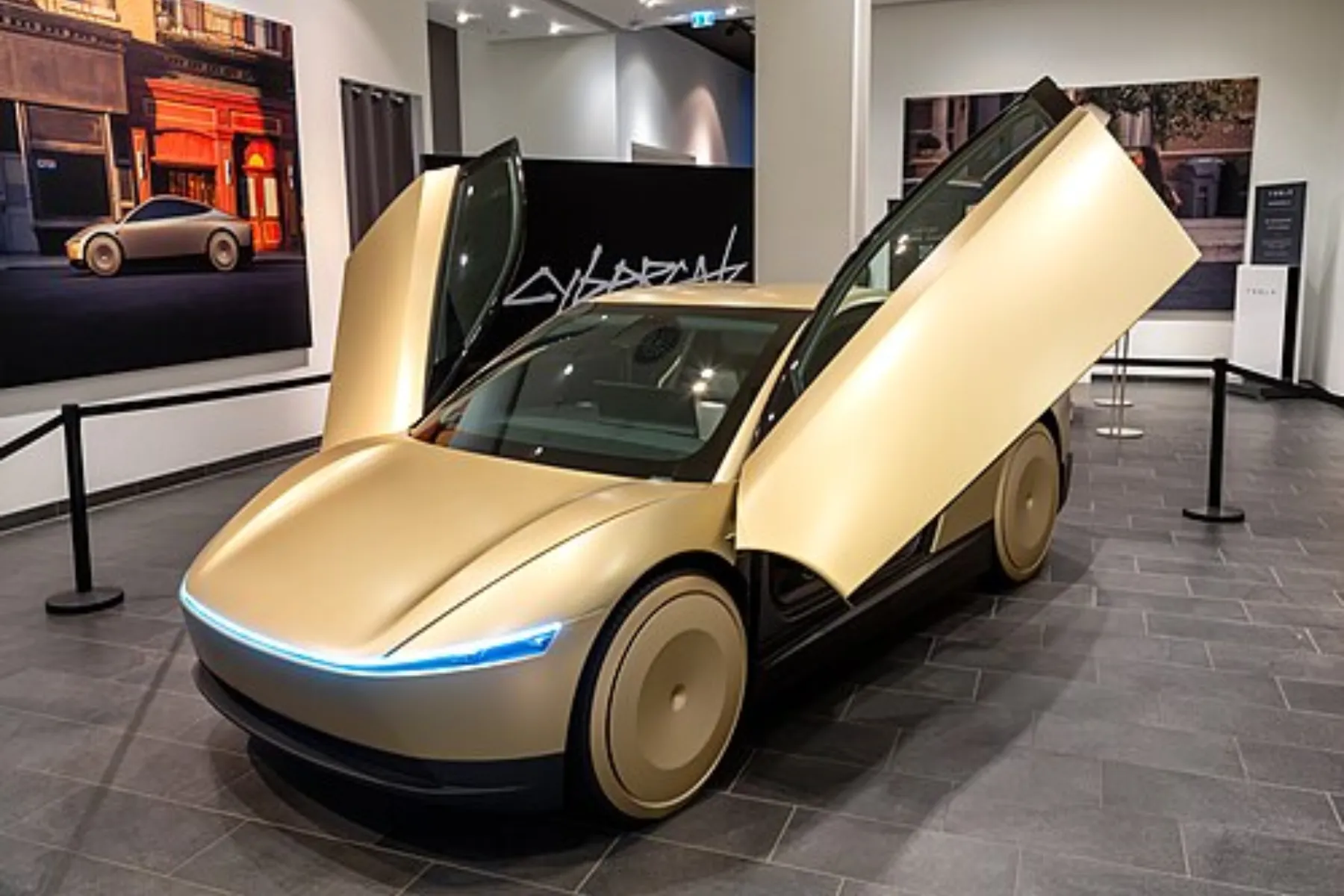
Tesla Cybercab
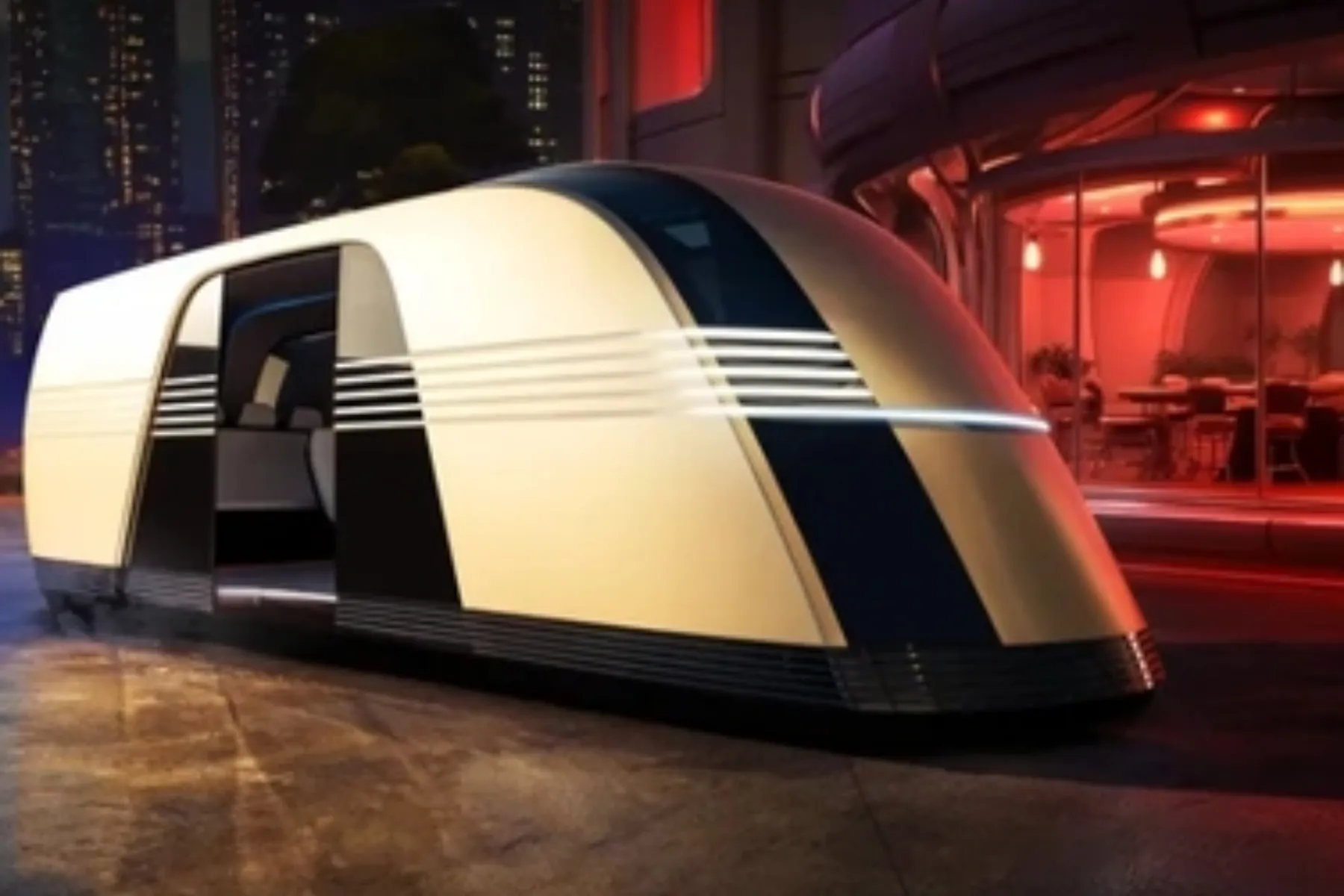
Tesla Robovan
And in July 2025, Tesla rolled out a software update adding Grok, an in-car chatbot. While Grok lets drivers chat and get information right from the dashboard, it doesn’t have control over the vehicle itself.
That same month, Tesla made its first official step into India, opening a showroom in Mumbai’s Bandra-Kurla Complex with the Model Y as its debut model.