


Electric cars have been steadily gaining popularity all around the world in the 21st century. But really, where did it all start?
Let me give you a comprehensive, era-by-era history of electric cars, focused on the major innovations that truly moved the segment forward. No single list can capture literally every minor tweak or one-off prototype, but this covers the decisive breakthroughs in technology, business models, and infrastructure that changed what electric vehicles (EVs) could be and how quickly they spread.
Pioneering experiments (1820s–1890s)
From the late 1820s to mid 1830s, inventors such as Ányos Jedlik, Thomas Davenport, and others built small electric motors and primitive model vehicles. This innovation led to what we now call the basic concepts of an electric car. This included electric motors, dynamos, and batteries to power the traction motor.

From the late 1850s to 1880s, we saw innovations in rechargeable batteries. Gaston Planté’s lead-acid battery, made in 1859 was improved by Camille Faure in 1881. This improvement made possible practical, rechargeable onboard batteries. This is regarded as the first rechargeable chemistry that was robust enough for vehicles.

Gustave Trouvé’s tricycle, made in 1881, is regarded as the first practical EV and soon European/US manufacturers started building workable electric carriages. There was also a personally built electric car in 1884, made by Thomas Parker. Though, the world's first electric car is generally attributed to the Flocken Elektrowagen, built in Germany in 1888 by Andreas Flocken.
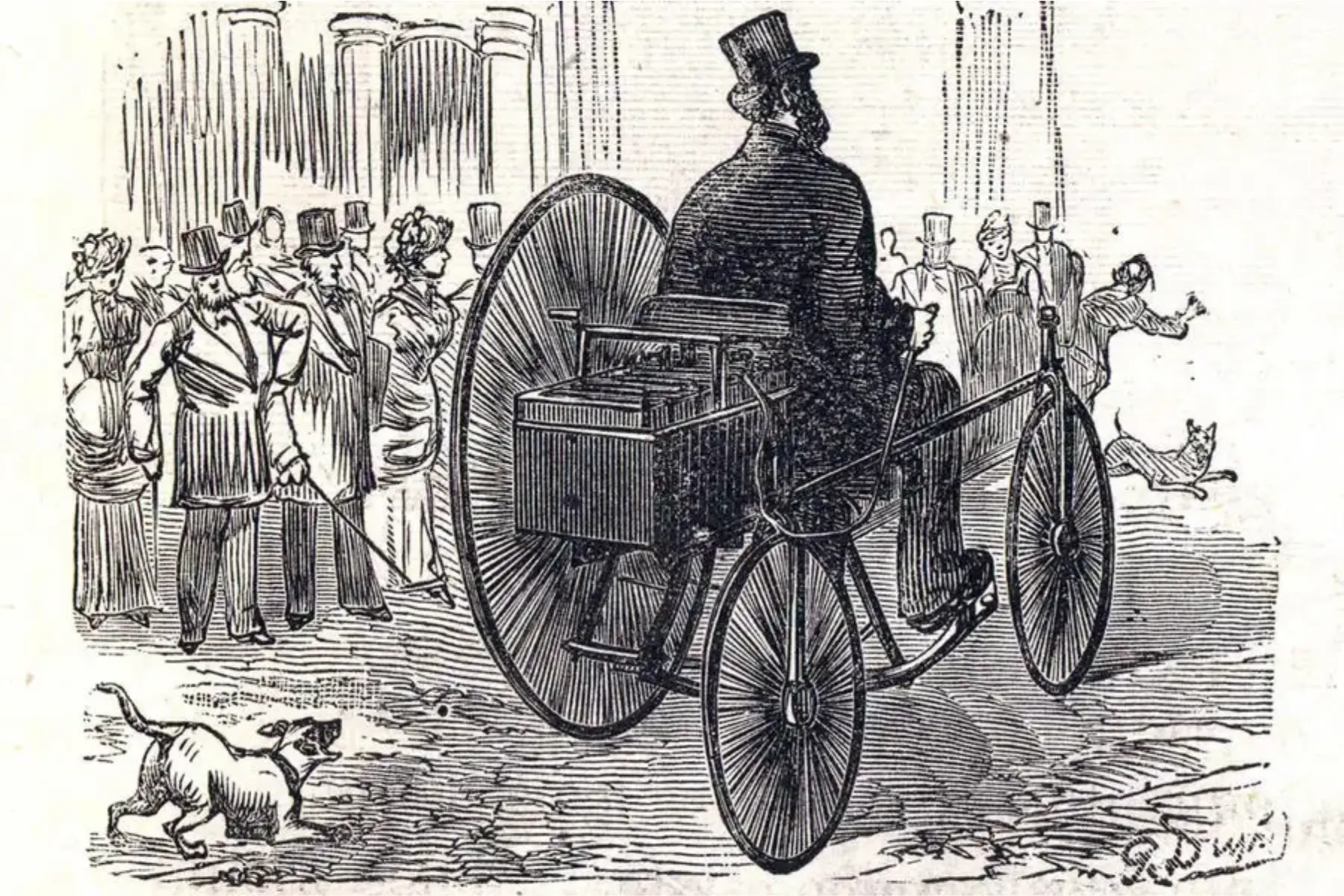
Gustave Trouvé’s Tricycle
.webp)
Flocken Elektrowagen (1888)
Ultimately, this proved to the world that quiet, clean, gearless urban carriages were entirely feasible.
Golden age of early EVs (1896–1915)
EVs quickly took over the urban landscape in the 1890s. EVs were regarded as the most popular city cars, with taxis in New York and commercial delivery vehicles switching to EVs. These new vehicles proved cost efficient for short-range, stop/start urban duty cycles, especially in the commercial space.

Further refinements to the direct-drive motors, gear reductions, and early differential designs for smooth torque led the way for drivable, reliable propulsion layouts that minimized shifting and maintenance.
Some manufacturers even experimented with motor-as-generator braking to capture energy on descents and stops. This is what we now call regenerative braking which is a unique EV innovation to help extent range and control speed without wearing out the brakes too quickly.
In 1901, Edison’s nickel-iron batteries that had longer lives, found some use in EVs, marking the move beyond lead-acid batteries for durability. Though it had certain drawbacks, it was an important step in the final discovery of the Lithium-ion batteries.

From 1900 to 1905, electric cars were the preferred mode of transportation due to its various advantages over horses, bicycles, railroads, steamers, and gasoline-powered vehicles. Electric motors were previously used in electrified street cars, and the widespread use of electric vehicles was fueled by notable advancements in battery technology. In fact, by the turn of the century, early EVs had advanced significantly more than other accessible forms of transportation.
Ultimately, these cars were made with an enclosed body, like Detroit Electric, and focused on user-friendliness with the inclusion of steering wheels and improved controls.
Why the first decline? Cheap gasoline. The 1912 electric starter was traded in for internal-combustion engines which removed hand-cranking. Moreover, better roads enabled longer trips, and mass-production, like Ford’s Model T, tilted the market toward ICE cars.

Survival, niches, and research (1916–1989)
Despite the shift away from PEVs (Passenger Electric Vehicles), commercial fleets remained in the electric world, with delivery trucks and utility vehicles where range was manageable.
Battery chemistry kept improving. Lead-acid improved slowly; nickel-cadmium appeared; zinc-based and sodium-sulfur chemistries were studied. This set the stage for higher-specific-energy cells. There was also a transition from rudimentary resistive controls to more efficient electronic controllers, which meant higher efficiency and finer torque control.
The space race in 1970s propelled battery innovation to the sky, with high-specific-energy, high-reliability batteries powering the Lunar Roving Vehicle. The lightweight, robust battery systems proved to be a solid choice for extreme conditions.
Additionally, the oil-crisis pushed automakers to reinvest in electric vehicles, with consumer interests resurging during fuel shocks.

Policy-driven renaissance and the first modern BEVs (1990–2007)
California’s zero-emission vehicle (ZEV) mandates in the 1990s catalyzed serious programs. This meant that policies were seen a market-creation tool for cleaner propulsion. in the
General Motors EV1 was launched in 1996, with sales reaching upwards of 1,000 units in the three years of its production. This was the first purpose-built BEV with real highway performance and refined charging hardware. Additionally, it used a Nickel-metal hydride (NiMH) battery which was another innovation in the industry. NiMH battery SUVs saw an immediate rise with the launch of Toyota’s RAV4 EV in 1997.
Why did it not tip the scales in the favor of EVs? Batteries remained heavy and expensive, with modest range and unreliable public charging infrastructure.
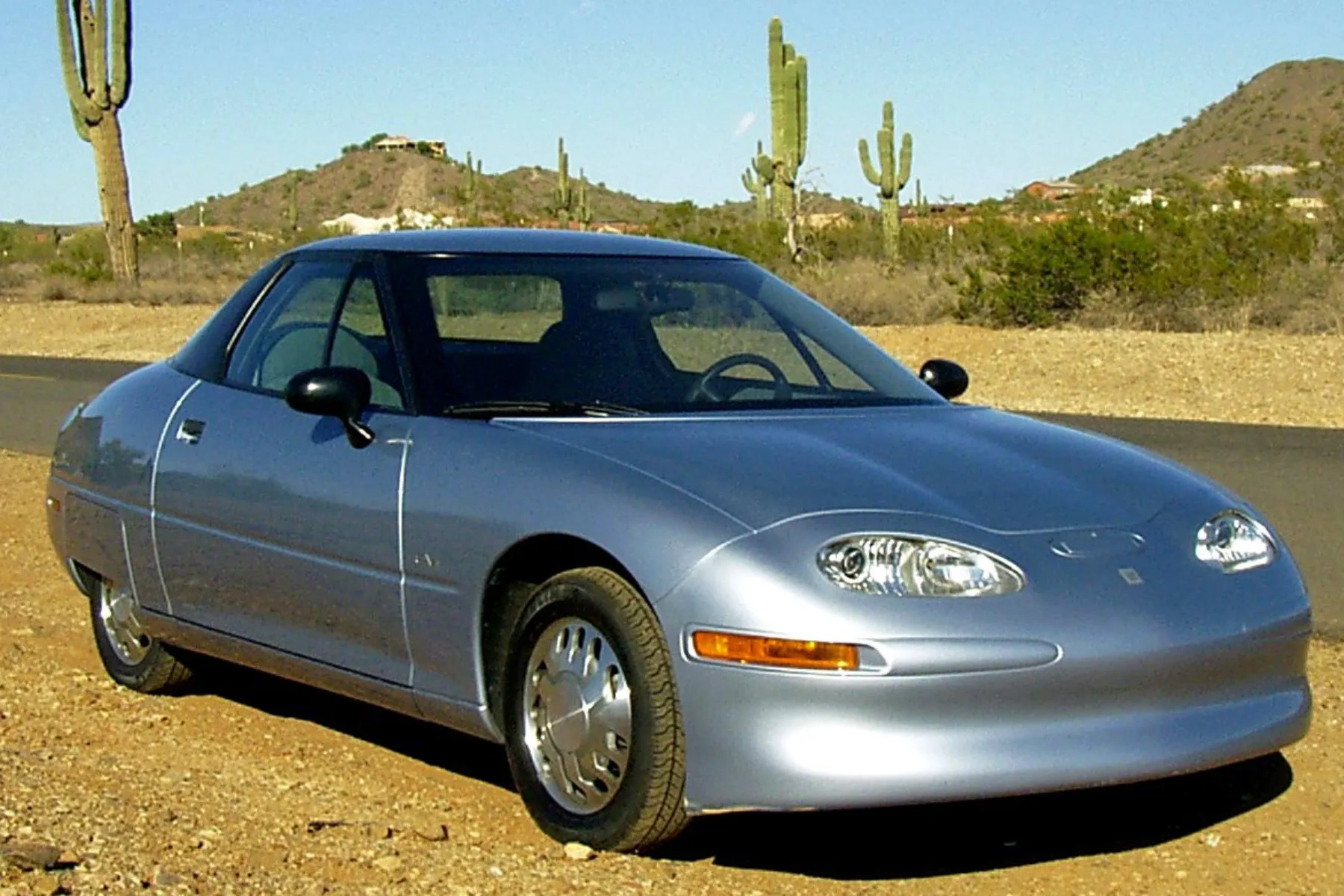
General Motors EV1
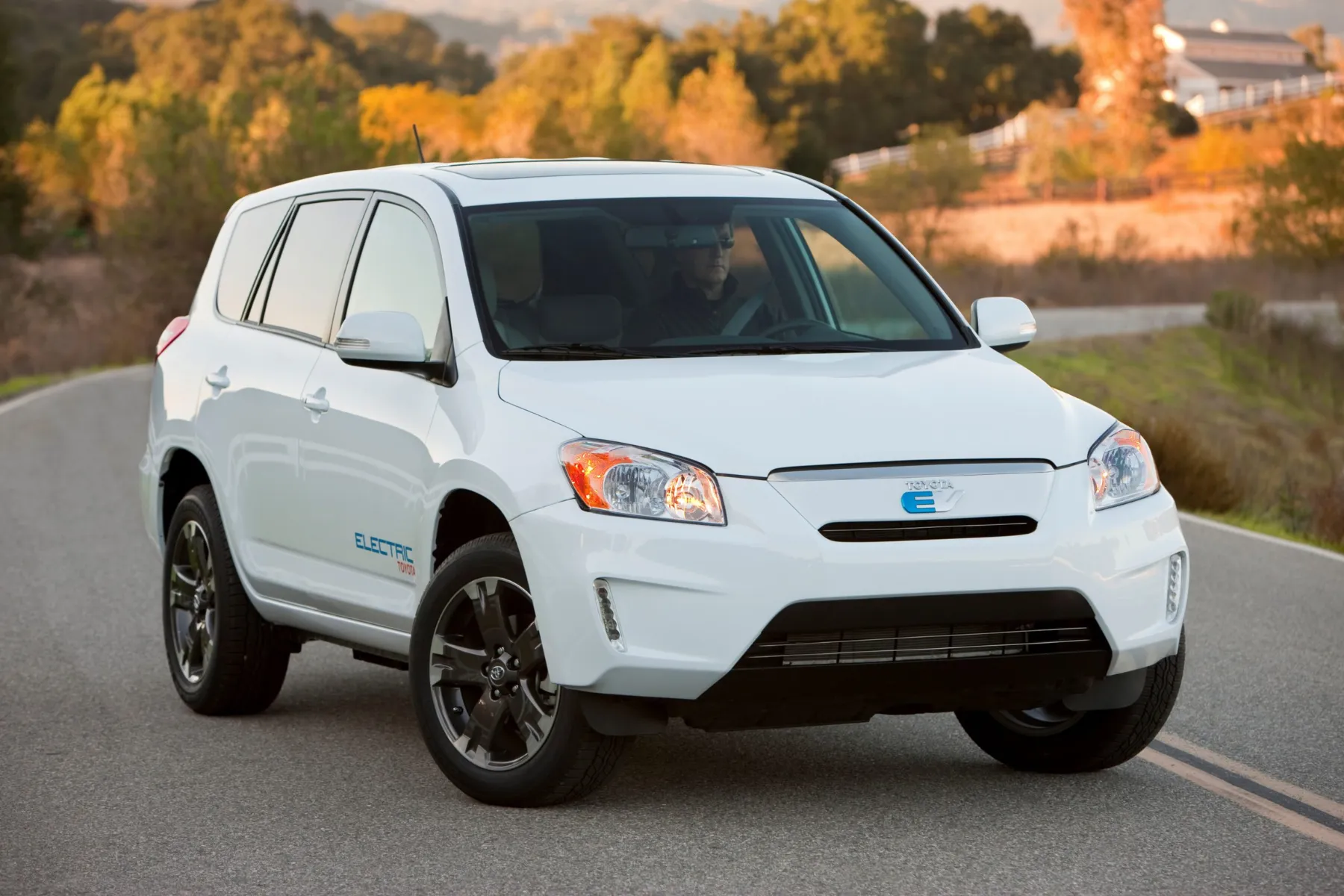
Toyota RAV4 EV
Lithium-ion, software, and the modern EV (2008–2020)
Li-ion batteries, that were initially widely commercialized in laptops and power tools, ultimately migrated to the automotive industry. From 2008, these became a standard for electric vehicles as they provided higher energy density and longer cycle life.
In 2008, Tesla launched the Roadster with these Li-ion cells, high-performance AC drive, and a sophisticated BMS (battery management system). It proved to the world that EVs could be fast, reliable, desirable, and long-range.
2010 saw the launch of Nissan Leaf, the first high-volume, affordable modern BEV hatchback.
.webp)
Tesla Roadster (First Generation, 2008)
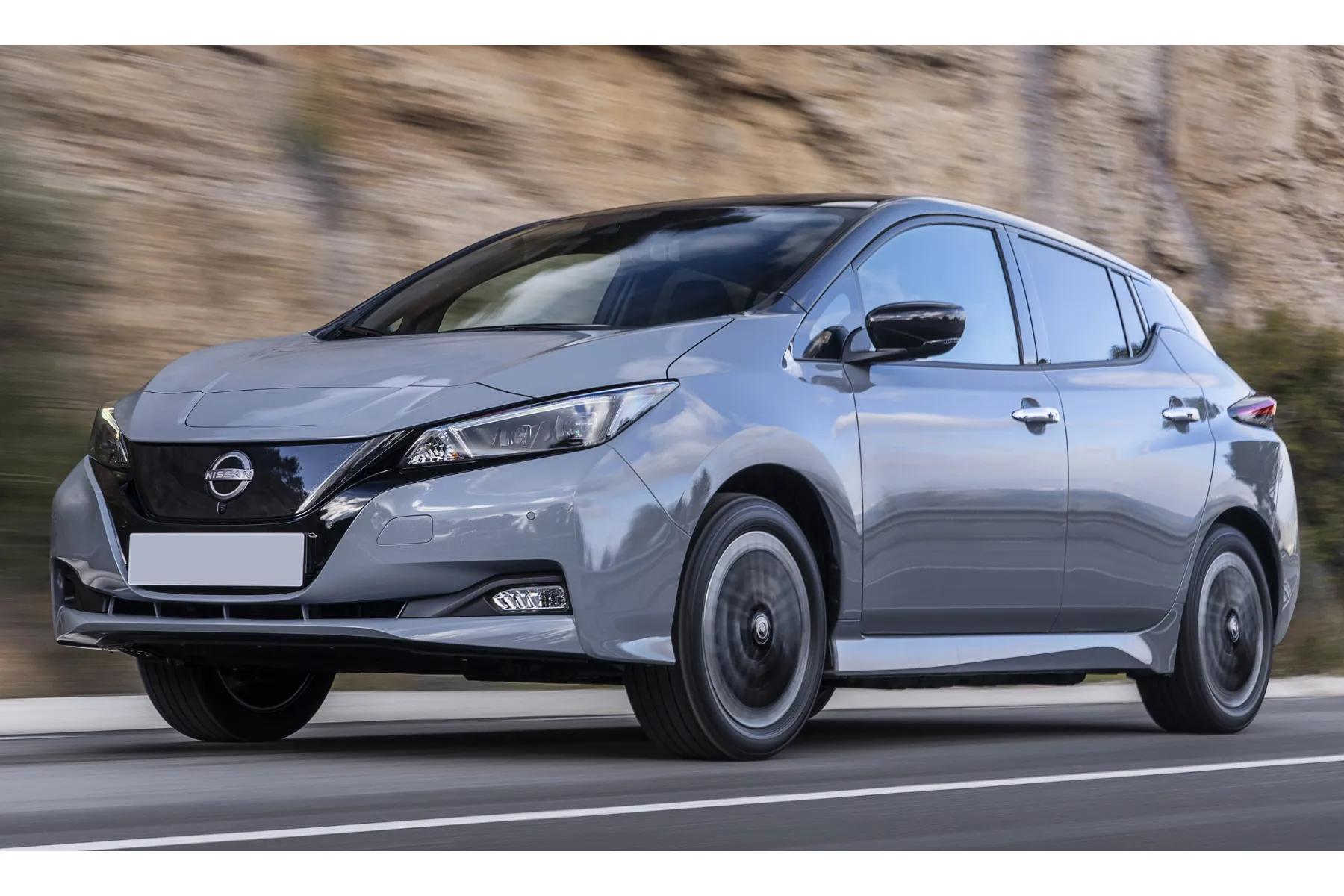
Nissan Leaf EV
Additionally, fast-charging networks began, with Tesla Superchargers and CHAdeMO rollouts. Over-the-air (OTA) updates and telematics saw preference and allowed for post-sale feature enhancements.
DC fast charging standards also emerged, with the CCS Combo in Europe and North America, CHAdeMO in Japan and GB/T in China and India. There was also notable motor innovation with the permanent-magnet synchronous motors (PSMS).

The 2020s: industrialization, high voltage, and new chemistries (2021–present)
With EVs slowly taking over the world, we saw a rise in 800-volt vehicle architectures like the Hyundai/Kia E-GMP, which allowed for faster charging, thinner cables and provided efficiency at highway speeds.
LFP (Lithium Iron Phosphate) batteries also made a comeback for cost, longevity, and safety, especially for standard-range models. These were cobalt-free, stable, and proved durable for mainstream trims.
Gigafactories, vertically integrated supply chains, and regionalized production led to a manufacturing scaling and cost curves. Ultimately, this led to lower pack costs.
Bi-directional inverters that enabled vehicle-to-load (V2L), vehicle-to-home (V2H), and vehicle-to-grid (V2G) turned EVs into mobile batteries.

What’s next (near- to mid-term trajectories)
Solid-state batteries: Ongoing R&D aims for higher energy density, faster charging, and improved safety; limited pilots expected before broad adoption. Innovation target: lighter packs and shorter charge times without sacrificing cycle life.
Sodium-ion batteries: Lower-cost chemistries for short-range models and stationary storage; good cold-temperature progress continues. Innovation target: cost resilience and diversified supply chains.
Even higher system voltages and better power semiconductors: 900–1000 V systems and wide-bandgap devices (SiC, GaN) for further efficiency. Innovation target: faster charging with less mass and heat.
Deeper pack integration and recyclability: Designs for disassembly, second-life reuse, and closed-loop material flows at scale. Innovation target: sustainable economics and reduced upstream impact.
Grid integration at scale: Aggregated V2G and demand response; chargers as grid assets. Innovation target: cheaper electricity and resilient grids.